


LED vs Metal Halide: Which Lighting Technology Wins

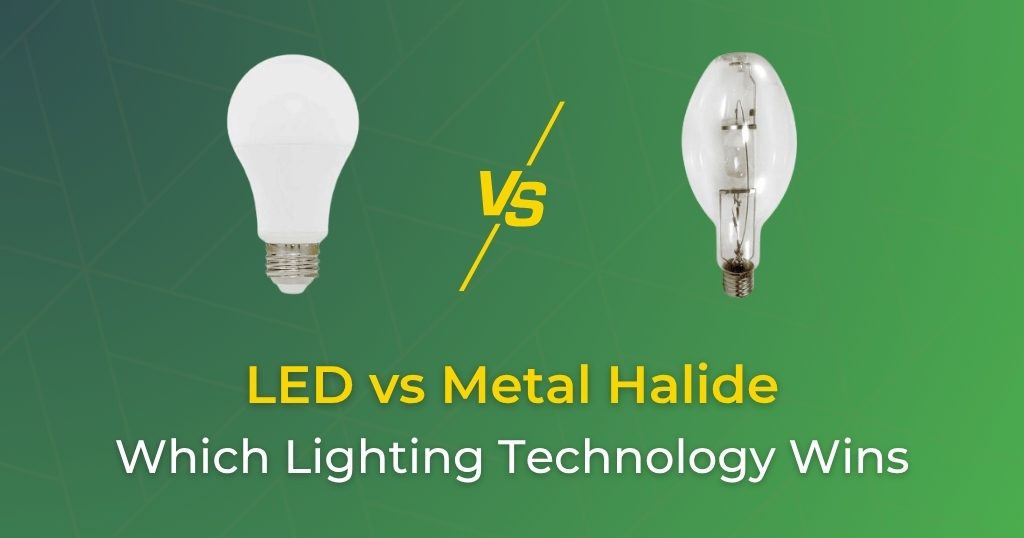
You would be surprised to find that a simple switch to modern lighting could drastically reduce electricity bills at your home & commercial spaces. Lighting is one of the most cost-consuming yet overlooked among your investments for your interior and exterior spaces, which makes it necessary for you to judiciously choose the lighting solution which caters to your specific needs. That’s where LED vs Metal Halide comes in, compelling customers to choose wisely!
According to US Department of Energy, lighting consumes around “15% of an average home’s electricity use” & for commercial buildings the figure goes up to 17%, making it crucial for both residential and commercial users to shift to a lighting technology that saves energy & slashes down electric bills, without compromising the brightness levels of your space. Let’s look for which technology works best for your needs!

1×4 Grid Frame LED T-Bar Panel Light, Adjustable Wattage (20W/30W/40W), CCT Changeable (3000K/4000K/5000K), 5200 Lumens, ETL & DLC 5.1 Listed

1×4 LED Panel Lights, 40W/35W/30W/25W/20W Wattage Adjustable, 30K/35K/40K/50K/60K CCT Changeable, 5200 Lumens,120V–277V, ETL & DLC 5.1 Listed

2×2 LED Panel Light – Adjustable 20W–40W, Changeable CCT 30K–60K, 5200 Lumens, 120–277V, Dimmable, ETL & DLC 5.1 Listed

2×2 LED T-Bar Panel Light, 40W/30W/20W Wattage Adjustable Upto 5000K CCT Changeable, 5200 Lumens, Ideal for Offices, Schools & Commercial Spaces

2×4 LED Panel Light 72W/60W/50W/40W/30W Adjustable Upto 60K CCT Changeable, 9360 Lumens, For Offices & Commercial Spaces
Know the Basics: LED Lighting vs Metal Halide
LED (Light Emitting Diodes) and Metal Halide lights are commonly used in residential decor as well as commercial lighting solutions, especially for large spaces like warehouses, gymnasiums, retail stores, factories, parking lots, etc.
- LED lighting uses electroluminescence technology, in which light is emitted when a strong electric current is applied, allowing for direct conversion of electrical energy into light & creating minimal heat.
- Metal Halide lighting, on the other hand, are high-intensity discharge (HID) lights which require a warm-up period before they switch on, producing more heat & wasting energy.
LED Lighting Benefits
LED lighting is the cleanest, most energy efficient & flexibly designed alternative to any other lighting solutions:
- Long Life: Long lifespan in one of the most standout features of LEDs, enabling them to run longer than other alternatives. Good products conforming to industrial standards can have up to 50,000 hours of lifespan.
- Energy efficiency: The US Department of Energy says that Energy Star-rated products use up to 75% less energy than traditional lighting solutions.
- Durable Quality: LEDs are extremely durable & are built with strong components, that are highly rugged and can withstand even the roughest conditions, reducing maintenance & operational costs.
- Eco-friendly: LED lights have comparatively lower levels of toxins, as compared to traditional lighting options, including metal halides and incandescent lights & they are recyclable too.
- Weather-Resistant: LEDs are operational in extreme outdoor weather conditions as well as damp & dusty indoor spaces, because of their rating of IP65 or higher.
- No warm-up period: Instant On/Off feature of LEDs facilitates their energy efficiency while making them suitable to work with motion sensors & ideal for traffic signals, exit signs etc.
- Lower Voltage: LEDs illuminate even at lower voltage levels, making them ideal for working in a compatible manner with solar energy.
1×4 Grid Frame LED T-Bar Panel Light, Adjustable Wattage (20W/30W/40W), CCT Changeable (3000K/4000K/5000K), 5200 Lumens, ETL & DLC 5.1 Listed
1×4 LED Panel Lights, 40W/35W/30W/25W/20W Wattage Adjustable, 30K/35K/40K/50K/60K CCT Changeable, 5200 Lumens,120V–277V, ETL & DLC 5.1 Listed
2×2 LED Panel Light – Adjustable 20W–40W, Changeable CCT 30K–60K, 5200 Lumens, 120–277V, Dimmable, ETL & DLC 5.1 Listed
2×2 LED T-Bar Panel Light, 40W/30W/20W Wattage Adjustable Upto 5000K CCT Changeable, 5200 Lumens, Ideal for Offices, Schools & Commercial Spaces
2×4 LED Panel Light 72W/60W/50W/40W/30W Adjustable Upto 60K CCT Changeable, 9360 Lumens, For Offices & Commercial Spaces
Metal Halide Disadvantages
- Short Life span: Shorter lifespan is one of the major downsides of metal halide lighting, giving these products a durability of 6000 to 15000 hours only.
- Less energy efficient: Metal Halides generate a lot of heat, meaning the majority of the energy used is converted to heat and not light, reducing the energy efficiency.
- Less eco-friendly: Metal Halides are comparatively less eco-friendly due to their short life span, less energy efficiency & high warm up period, requiring more replacement & maintenance.
- High Warm-up period: Many metal halide lamps, especially those used as commercial lighting solutions in warehouses & sport facilities, take up to 15-20 minutes to warm up before lighting up.
LED vs Metal Halide Cost Comparison
Of course, the comparison would be incomplete without a cost comparison of LED vs Metal Halide:
- Initial Costs: Considering the upfront cost, LEDs are a little more expensive as compared to Metal Halide, which puts buyers in the illusion of cost-effectiveness.
- Maintenance & Operational costs: That’s the game changer – the maintenance cost of metal halide is higher making LEDs a clear winner, as a 150-Watt LED fixture can provide a similar light output to a 400-Watt Metal Halide bulb, saving 66% in energy consumption.
Industrial Lighting Options: A Comparative Snapshot
Let’s look at a comparative analysis of LED vs Metal Halide:
| Basis | LED | Metal Halide | Winner |
| Initial Costs | More | Less | Metal Halide |
| Maintenance & Operational costs | Low | Very High | LED |
| Dimmability | High dimmability | Limited Dimmability | LED |
| Lumen Output | 50+ lumens per watt | Less than 30 lumens per watt, with dropping levels over time | LED |
| Color Temperature | Adjustable | Fixed & generally cooler tones | LED |
| Light Direction | Directional(Less wastage) | Omni-directional (more wastage) | LED |
| Lifespan | Up to 50,000 hours | 6000-15000 hours | LED |
| Shock resistance | Resistant to shocks & vibrations | Highly sensitive to shocks & vibrations | LED |
Is LED better than Metal Halide? Investing in the right lighting
The comparison between LED vs Metal Halide clearly tilts in favor of LED lighting, for commercial and industrial applications as with longer lifespan, reduced maintenance costs, and superior energy efficiency, LED lighting benefits businesses looking for sustainable, high-performance illumination solutions.
As energy regulations tighten and operational costs rise, transitioning from Metal Halide disadvantages to modern LED technology is more than a recommendation & it’s a strategic investment. Read more about innovations & trends in modern LED lighting at What is New in Industrial LED Lighting: 2025 Innovations & Trends & explore energy efficient LED lighting options at Eagle Solar Supply!
 LED Troffer Lights